


Senate Chamber
The debates were as fiery as the decor in the upper house.
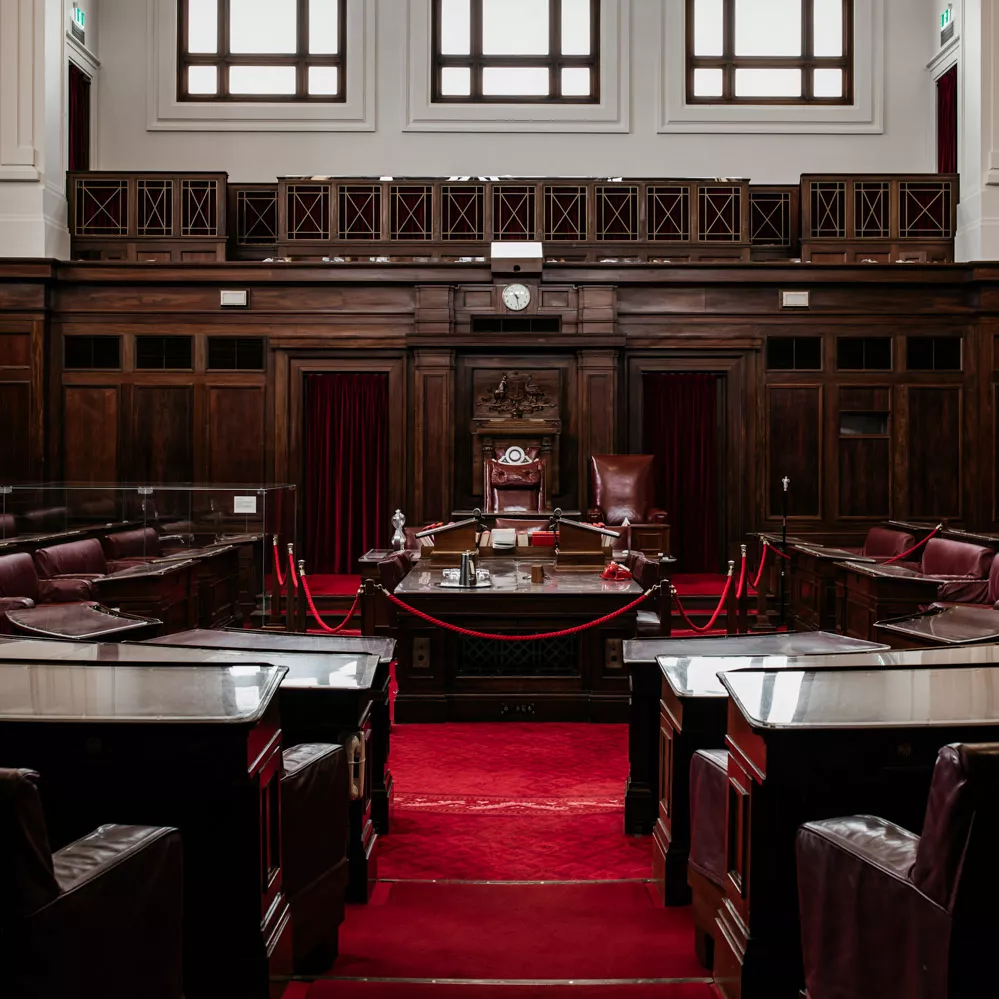
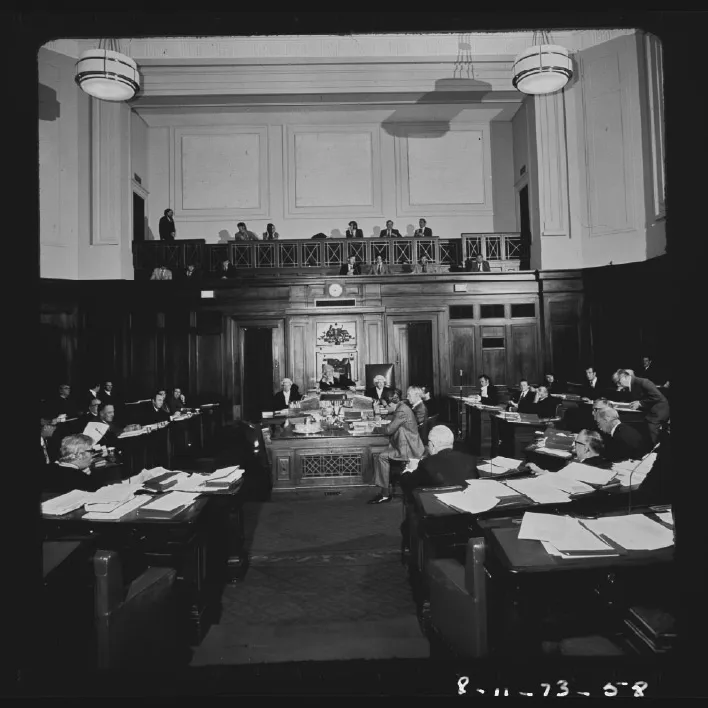
From 1927 until 1988, the Senate chamber at Parliament House was the home of the Senate, the upper house of Australian Parliament.
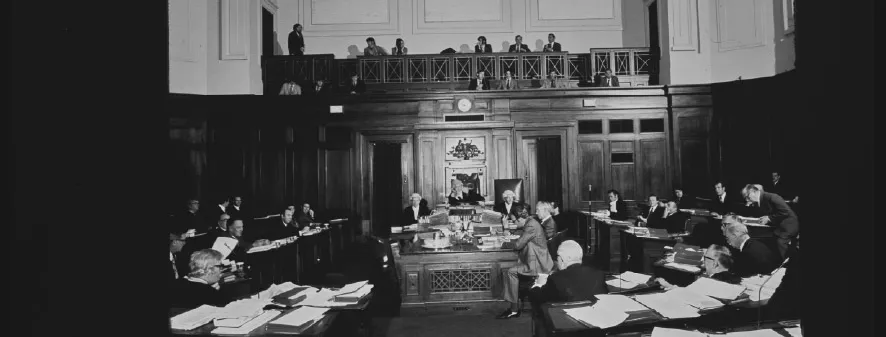
For over six decades, senators in the distinctive Senate chamber, furnished in shades of red, thoroughly and sometimes rowdily reviewed and debated bills (proposed laws) presented by the House of Representatives. In turn, bills were also introduced by senators for consideration in the House of Representatives. Important bills debated and introduced in this chamber related to social welfare, healthcare, First Nations land rights, media, income tax, economics, migration, agriculture, energy and industry, voting rights and electoral processes (including above-the-line voting).
Senators also gave impassioned speeches on key issues affecting Australians and Australia. In 1985 Amanda Vanstone, a Liberal senator from South Australia, delivered a passionate first speech where she highlighted youth unemployment and the plight of young Australians. At the age of 32, Vanstone was the youngest senator in the chamber at the time.
Senator Amanda Vanstone's first speech in 1985
0:00
Milestones in the chamber
The Senate chamber played host to many milestone events beginning with the opening of parliament after the official opening of Parliament House on 9 May 1927. With much pomp and ceremony, the Duke of York (later King George VI) formally declared parliament open. His wife, Elizabeth, Duchess of York, was in attendance for the opening along with Governor-General Stonehaven and the six state governors.
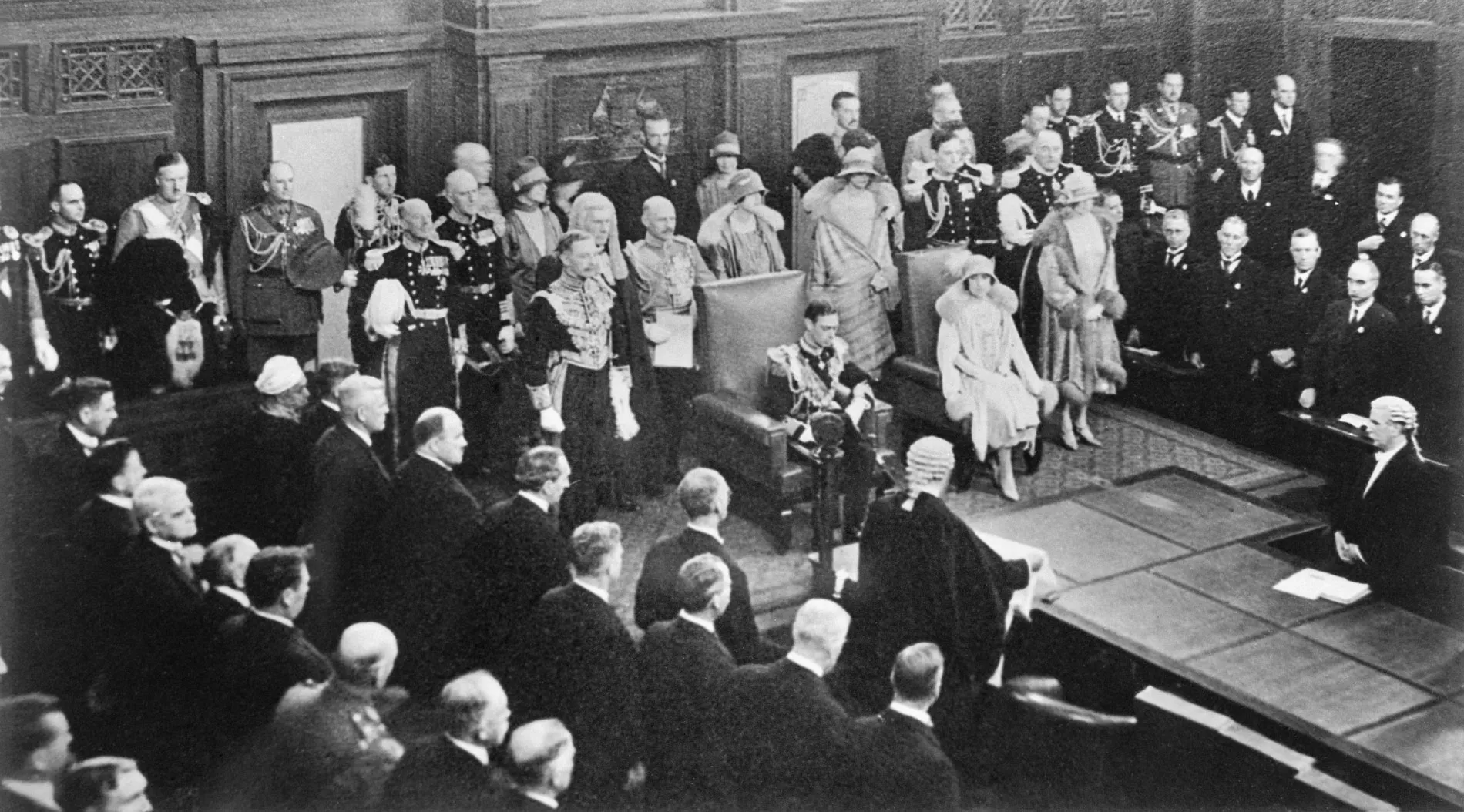
The opening of parliament on 9 May 1927 in the Senate chamber by the Duke of York (later King George VI) with the Duchess of York to his left.
Photograph NAA: A1200, L76961
Members of the royal family continued to visit the chamber. Queen Elizabeth II opened sessions of parliament in the Senate chamber three times, in 1954, 1974 and 1977.
Last sitting
One of the last petitions presented during the marathon last sitting in this chamber that spanned the 2nd and 3rd June 1988, was from 19 signatories asking that the cappuccino machine be moved to the new Parliament House up the hill.
What is the layout of the Senate chamber and what are the special features?
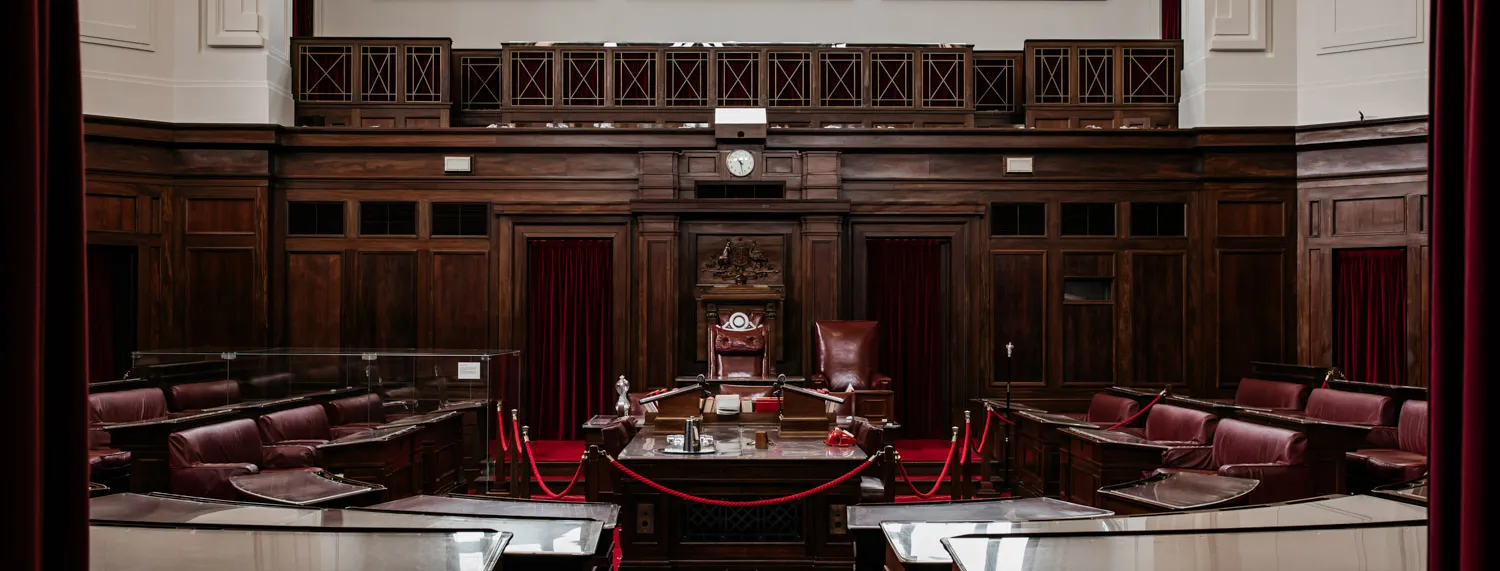
The seating in the Senate chamber is arranged in a horseshoe, with benches upholstered in rich red leather facing a central table and ornate President's chair. Furnishing the Senate in red was a tradition inherited from the British House of Lords with the horseshoe arrangement borrowed from the United States and France.
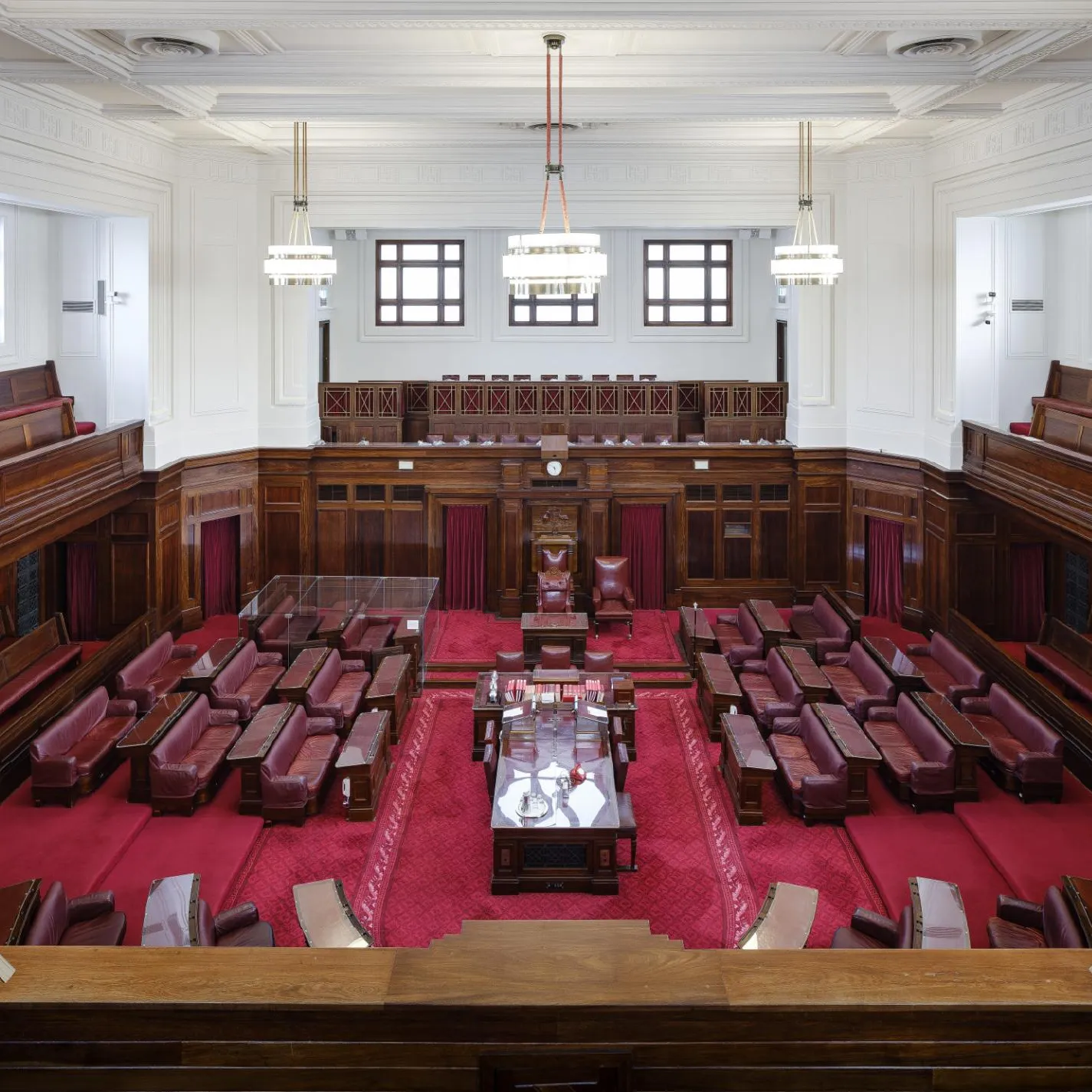
The ornate chair above the central table was for the President of the Senate, who's responsible for guiding and controlling proceedings. This chair, crafted in Canadian walnut, was gifted by the Canadian government for the opening of the building in 1927.
Government senators sat to the right of the President, and the opposition sat directly across, to the left. Minor parties and independent senators sat in between in the curved section, or 'crossbenches'.
The term 'crossbench' is from the United Kingdom, where the House of Lords has benches in the middle of the chamber.
The Clerks and the leaders of the senate for both government and opposition sat at the central table. The Hansard reporter and supervisor also sat at the central table with the reporter on a bench that could accommodate two people. The reporters provided a written record of what was said in parliament and needed a 'quick change' seat so one could leave while the next reporter took their place.
Upstairs, galleries for the public and press overlook the chamber. The public could listen to debates and watch parliament in action while members of the Federal Parliamentary Press Gallery observed and reported on the daily business.
Architect John Smith Murdoch included innovative grates for air conditioning in the chamber. Air conditioning wasn't widely available in Australia in the 1920s and its inclusion by the architect demonstrated his engagement with modern amenities.
Behind the President of the Senate's chair is the Vice-Regal Chair with a decorative crown atop the seat back. It is reserved for the monarch or their representative, the governor-general. Queen Elizabeth II sat in this chair on the three occasions she opened parliament.
The adjacent 'consort's chair' was for the spouse or consort of the monarch or governor-general. When Queen Elizabeth II opened parliament, the chair was occupied by Prince Philip, Duke of Edinburgh.
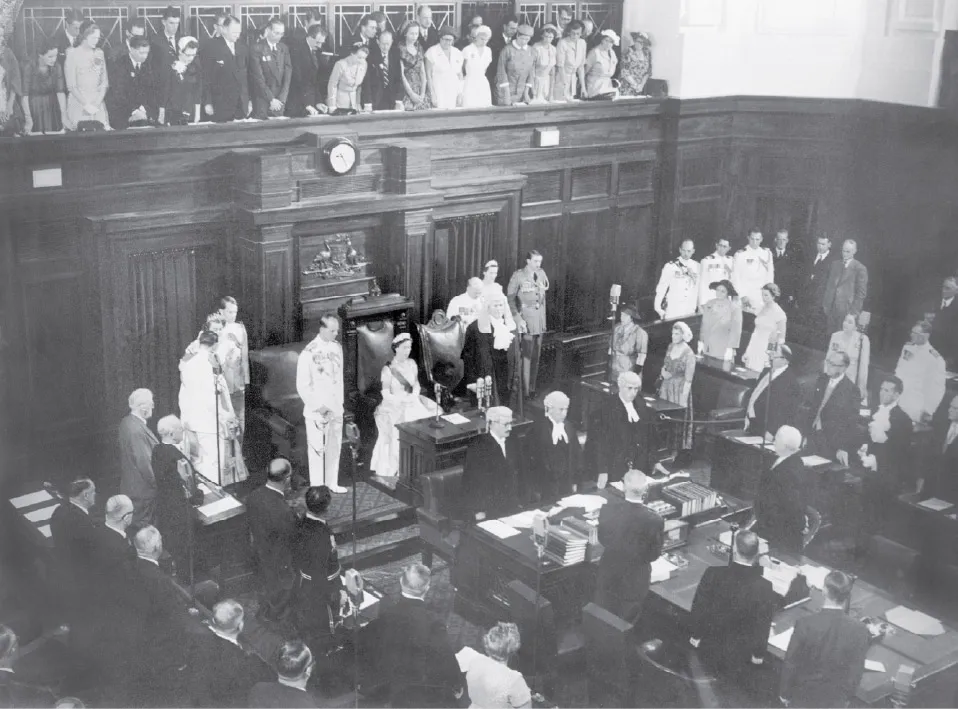
Queen Elizabeth II opening the 3rd session of the 20th parliament, 15 February 1954.
Photograph NAA: A1200, L42924
Who worked in the Senate chamber?
The Senate chamber was a hive of activity during sittings with the President of the Senate and their deputy, the clerks and the Usher of the Black Rod, senators, the Hansard supervisor and reporter, chamber attendants, and members of the Press Gallery and the visiting public in the room.
James Odgers was Clerk of the Senate from 1965 until 1979 and wrote the foundational work on Senate procedure, Odgers' Australian Senate Practice. He was clerk on the day of the dismissal of the Whitlam government by Governor-General Sir John Kerr and you can visit his office recreated for that day, 11 November 1975, at the Museum.
First woman elected to the Senate
Dorothy Tangney was the first woman elected to the Senate and began her term in 1943, the same year as Dame Enid Lyons, the first woman elected to the House of Representatives.
For the first five years of her 25-year tenure in the Senate, Tangney's party was in government, but after the 1949 election, she spent the remaining two decades on the Opposition benches. Before she was a senator, Tangney was a teacher, and she was a strong advocate for education.
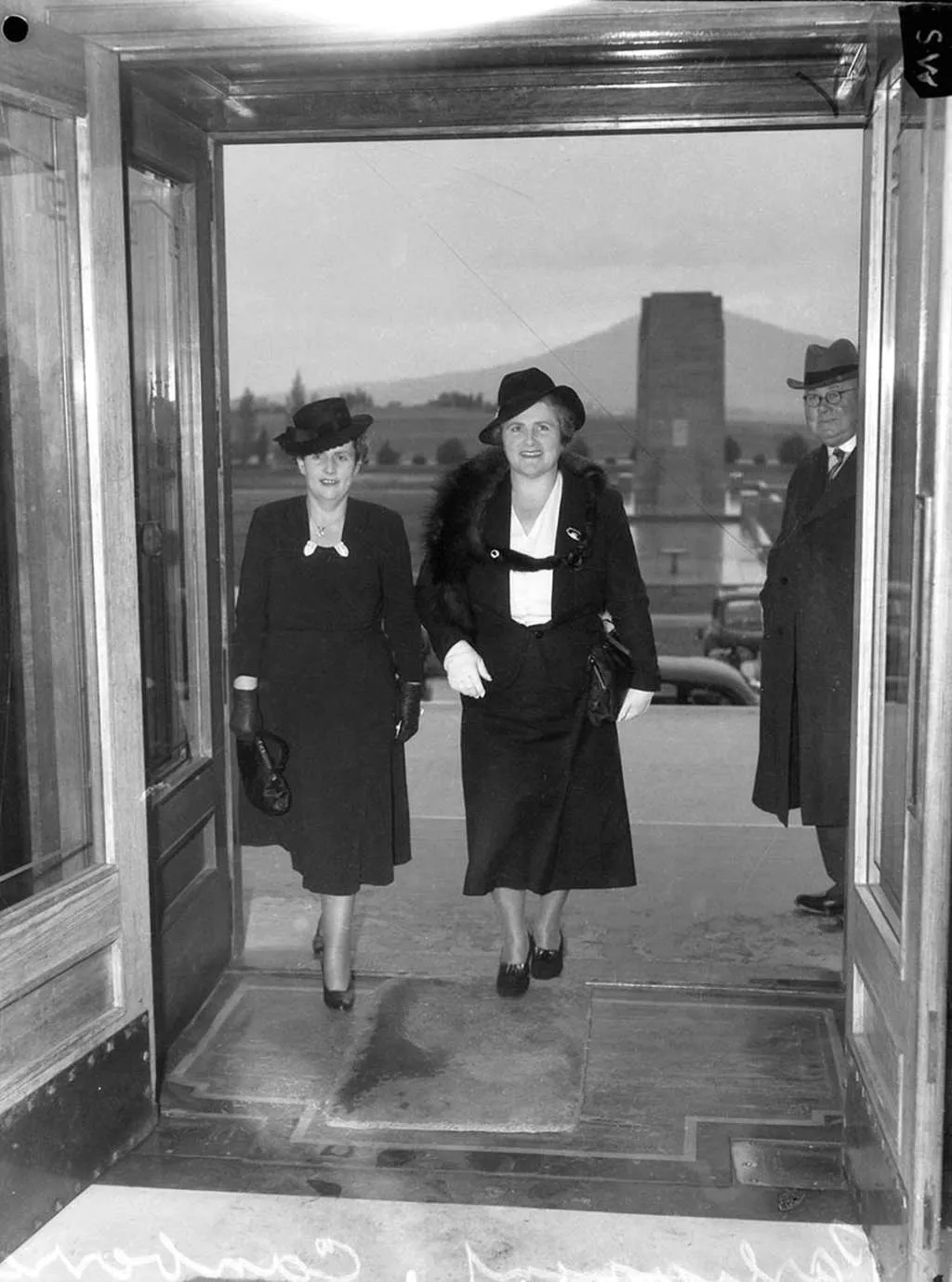
Dorothy Tangney and Enid Lyons walk through the doors of Parliament House in 1943 as its first female politicians.
Photograph Australian War Memorial
First Indigenous federal parliamentarian
Neville Bonner was the first Indigenous federal parliamentarian when he was appointed to the Senate in 1971. Bonner spent 12 years in office. Originally filling a casual vacancy for the Liberal Party, he was re-elected four times.
What changed in the Senate chamber over time?
When Parliament House opened in 1927 there were 36 senators – the chamber would have felt quite spacious. By 1988 when parliament moved to Australian Parliament House, it was crowded with 76 senators occupying the desks.
What does the Usher of the Black Rod do?
The Usher of the Black Rod is a senior official with a ceremonial and administrative role. The name of the role comes from the symbolic black rod they carry and follows a tradition from the House of Lords. The Usher of the Black Rod is responsible for escorting the President of the Senate in and out of the chamber, assisting the President of the Senate to maintain order, and delivering formal messages from the Senate to the House of Representatives among other duties.
You may also be interested in...
Reports, policies and plans
Find our strategic and corporate plans, policies and reporting.
Map
Use this page to find the locations of exhibitions, heritage spaces, the cafe and visitor facilities.

Board of Old Parliament House
The Board directs the objectives, strategies and policies followed by Old Parliament House.
Venue hire
Plan your next event at Old Parliament House.
APS Census
The APS Census reports reflect how staff feel about working at MoAD.

Contact us
Do you have questions or feedback for us?
