


Phonograph records of 1929 election speeches
The records include a rare recording of Stanley Melbourne Bruce, among others.
The speeches were recorded during the 1929 election campaign by leaders of the four parliamentary parties. Three of the speakers were prime minister at some stage of their career.
Incumbent Prime Minister Stanley Bruce (Nationalist Party) and Treasurer Earle Page (Country Party) spoke for the government, while Edward 'Ted' Theodore (Labor Party) spoke on behalf of his leader, James Scullin, who was unwell. The fourth, former prime minister Billy Hughes, was at that time the leader of the breakaway Australian Party. Hughes's vote in the House of Representatives had brought down the Bruce government and forced a new election, just 11 months after the previous one.
The speeches were not recorded live before an audience. Rather, they were made in a studio. Bruce's speech is a shorter version of the campaign speech he made at Dandenong on 18 September, while Hughes delivered a similar speech on the same night. At the time, it was not particularly common for politicians to record their speeches for the general public to hear.
Scullin and Labor won the election and took office only weeks before the beginning of the Great Depression.
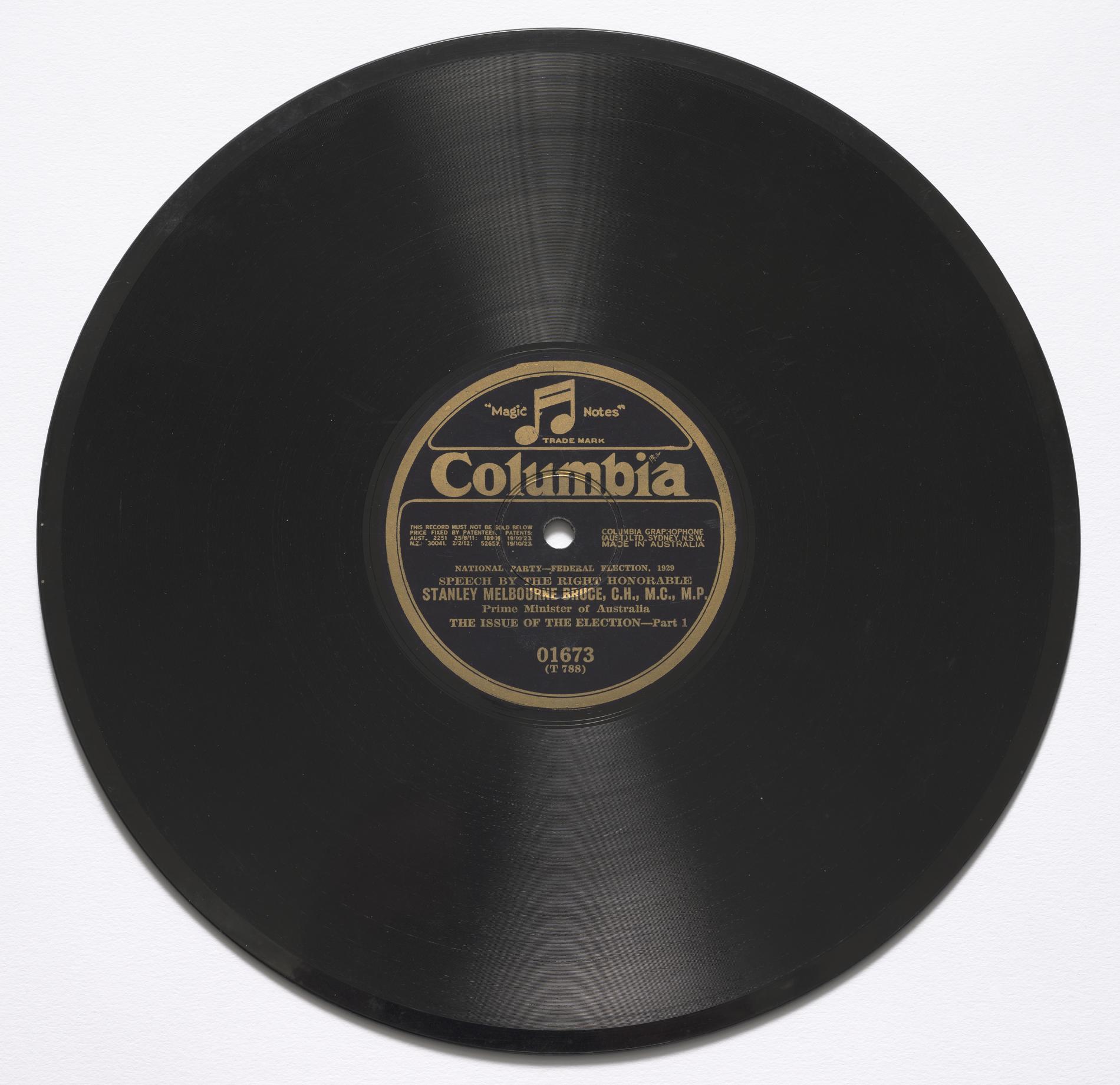
Phonograph record of Stanley Bruce's 1929 election speech.
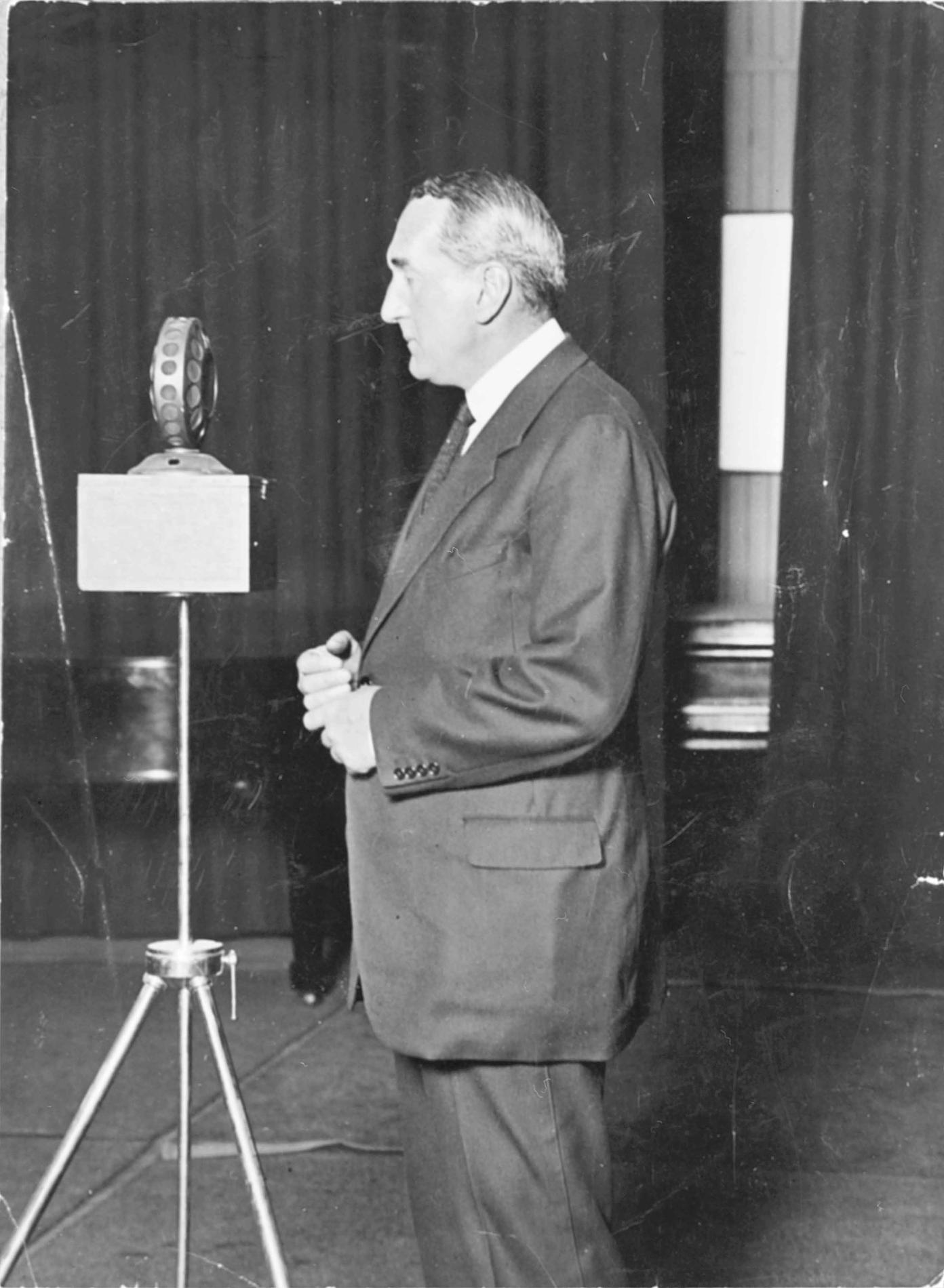
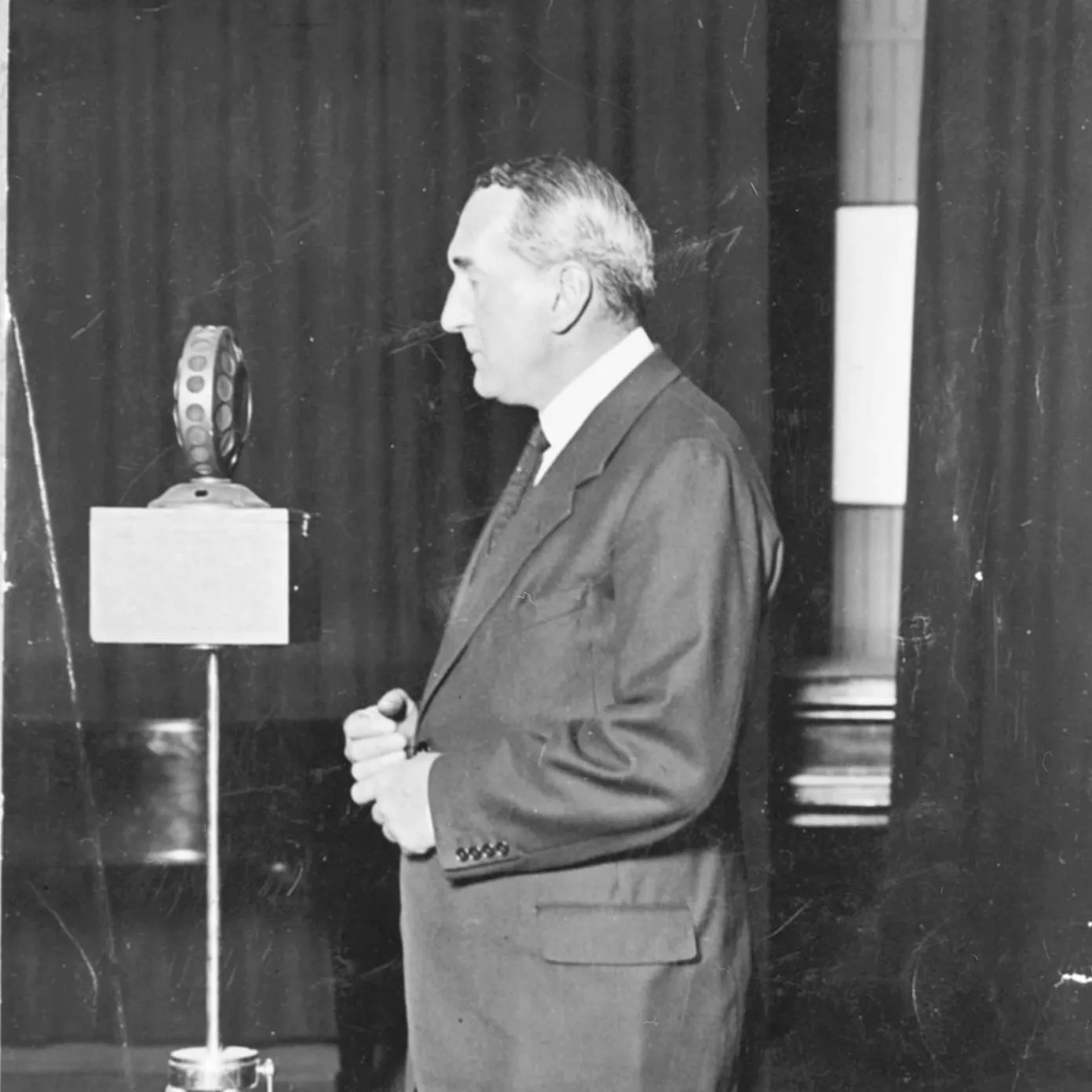
Prime Minister Stanley Bruce recording his election speech for Columbia Graphophone during the 1929 election, 1929.
Photograph NLA http://nla.gov.au/nla.obj-137205196
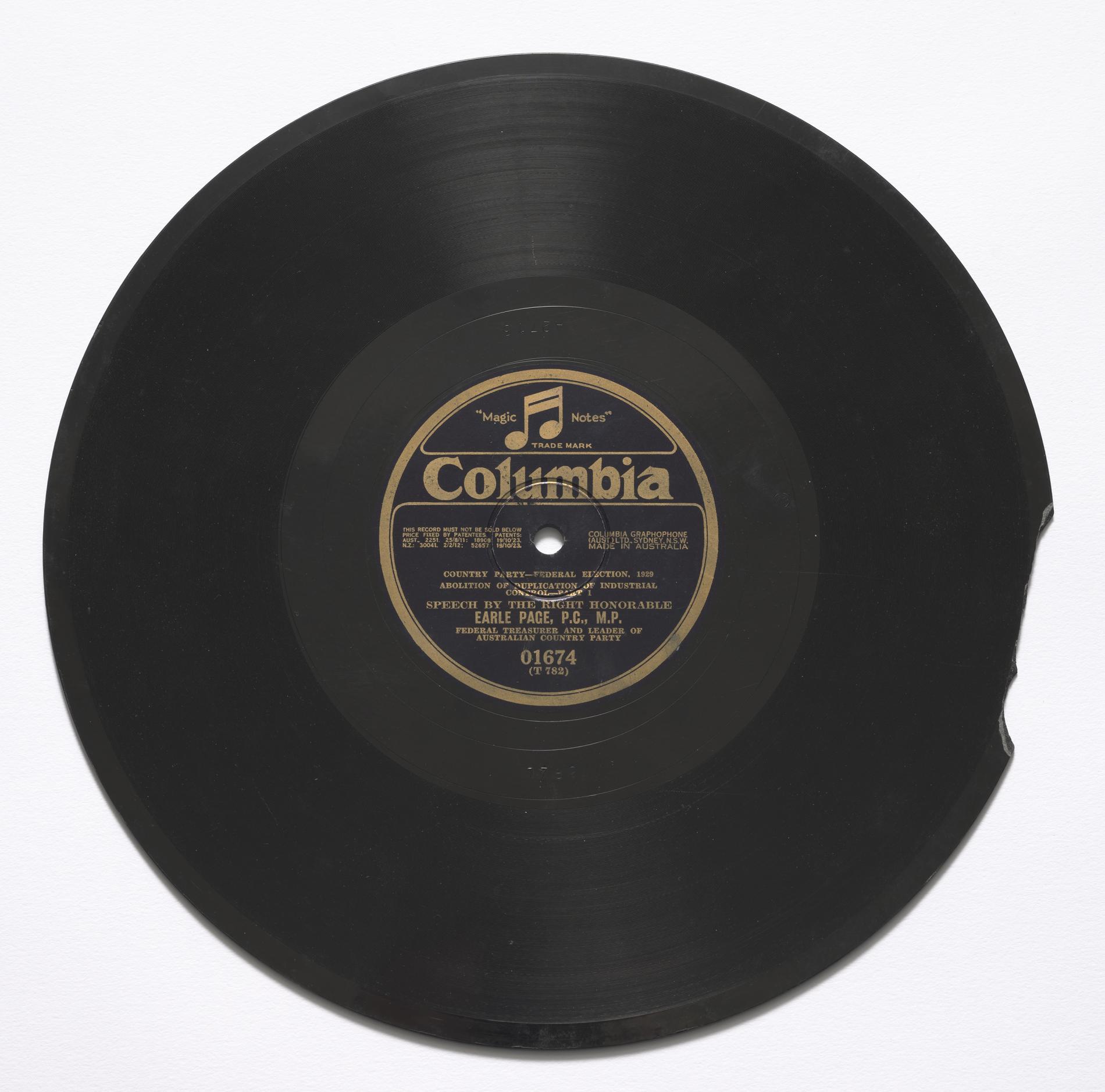
Phonograph record of Earle Page's 1929 election speech.

Sir Earle Page, 1929.
Photograph National Archives of Australia
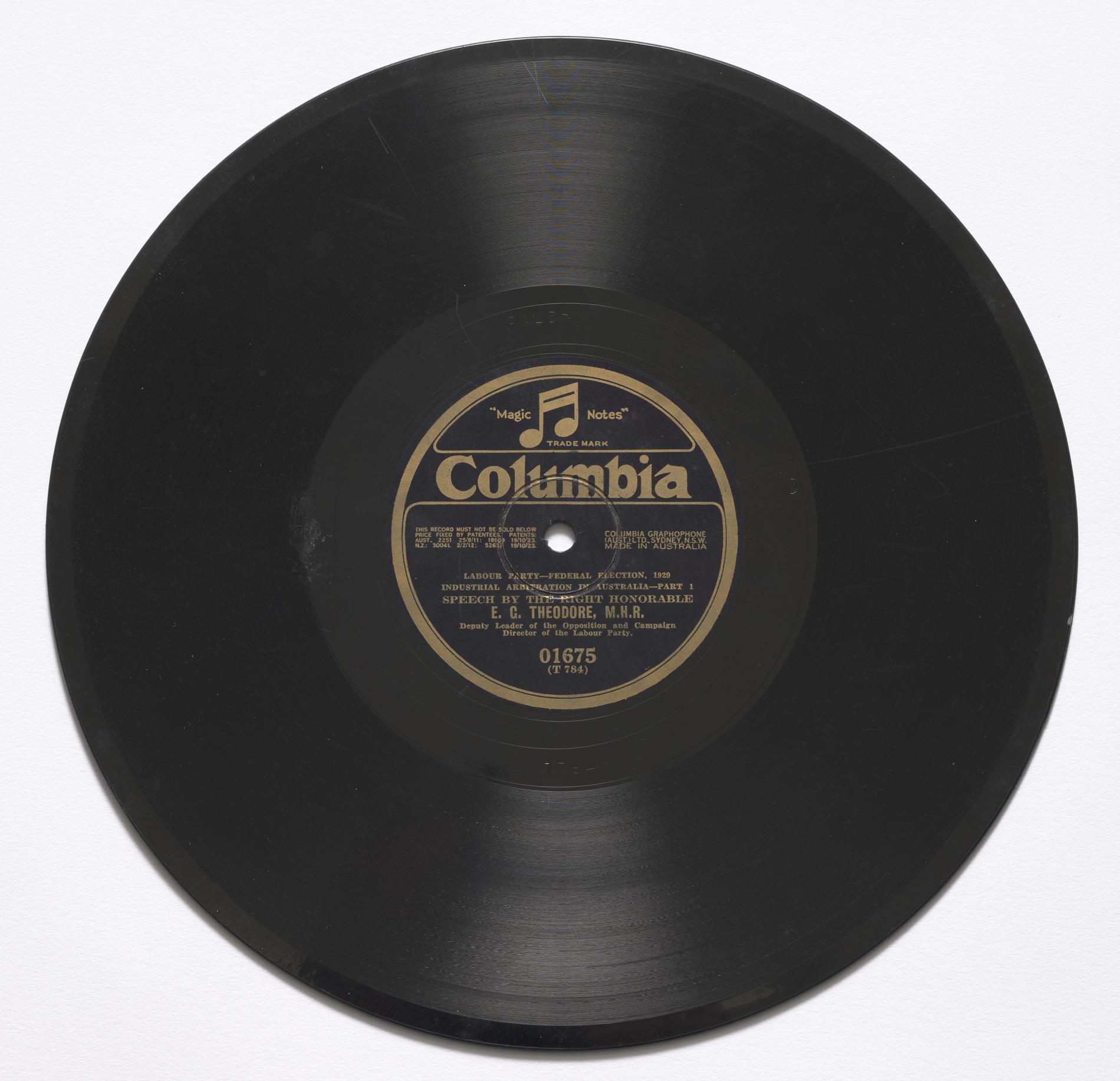
Phonograph record of Edward 'Ted' Theodore's 1929 election speech.
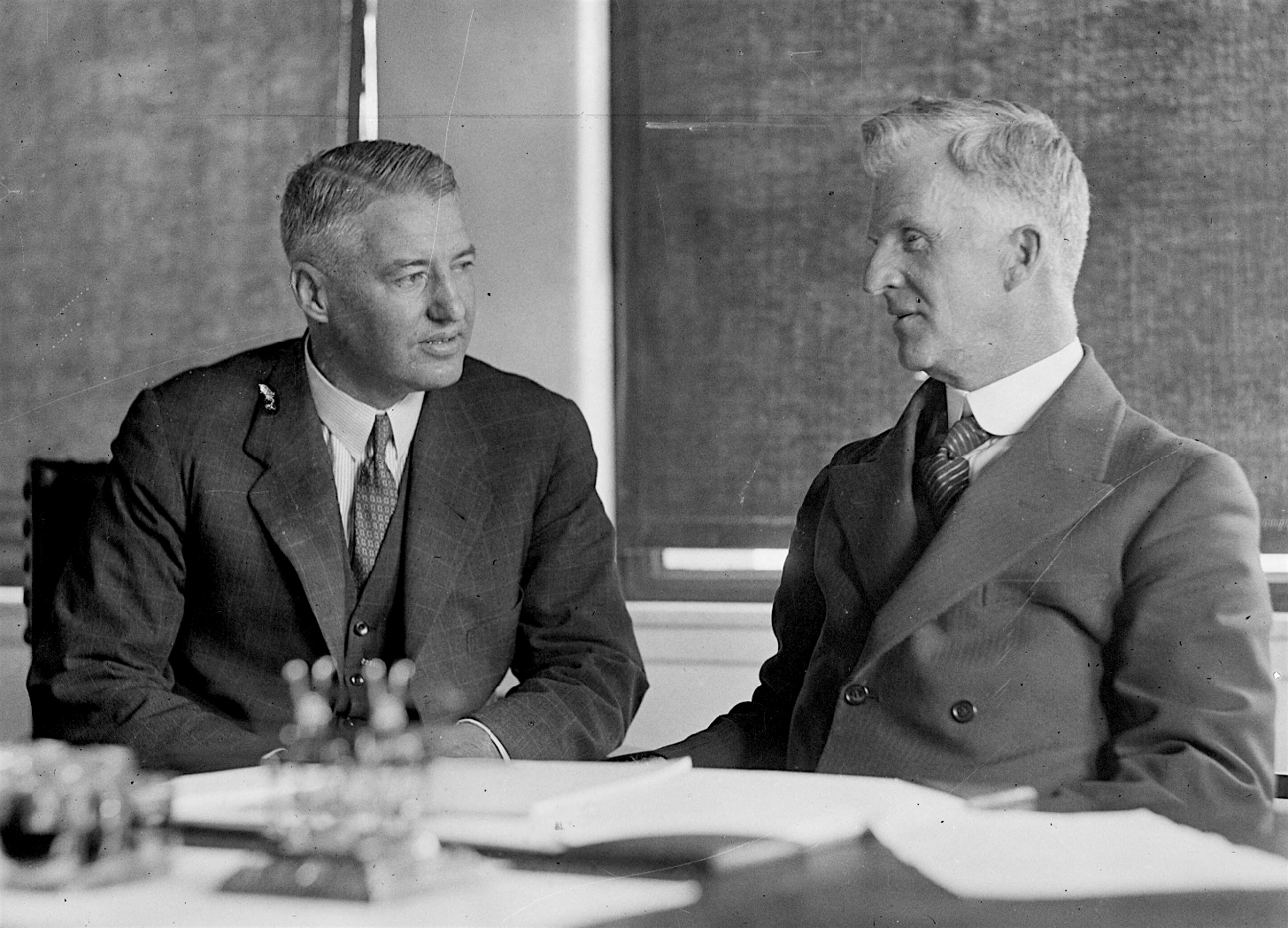
Edward 'Ted' Theodore (left) with Prime Minister James Scullin (right), December 1929.
Photograph National Library of Australia
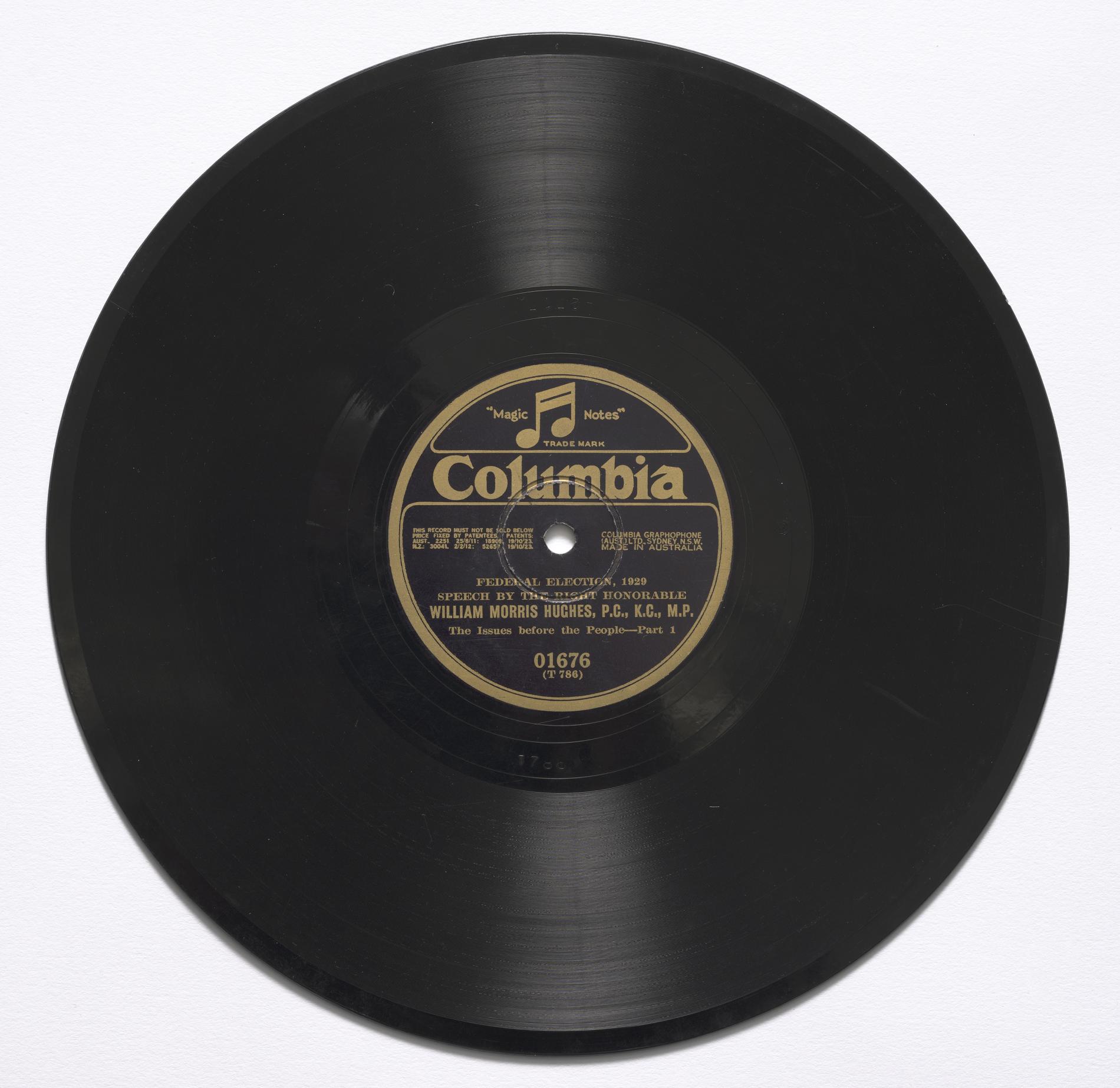
Phonograph record of Billy Hughes's 1929 election speech.

Billy Hughes.
These are some of the earliest known recordings of Australian prime ministers – there are no known recordings of the first five (Edmund Barton, Alfred Deakin, Chris Watson, George Reid and Andrew Fisher). Even Hughes, who was in politics for decades, appears to have made no voice recordings during his time in office – but he was frequently recorded much later.
Listen to the speeches
Stanley Bruce 1929 election speech
0:00
Earle Page 1929 election speech
0:00
Edward 'Ted' Theodore 1929 election speech
0:00
Billy Hughes 1929 election speech
0:00
Before recorded sound, voters might attend a speech, or an event by their local member, but had to rely on written reports about the prime minister or opposition leader. With the advent of radio and phonographs, it became possible for more people to hear from their leaders directly, in their own words. A speech made in a public hall, accessible only to a few hundred attendees, could now be experienced by thousands across the country. In Australia, recording and distributing campaign speeches came quite late in comparison to other countries. Recordings exist of U.S. and British political leaders of the 1900s.
These records are among the earliest recordings of Australian political campaign speeches. They appear to have been produced as commercial products for sale rather than by the parties and leaders. Columbia, the recording company, may have made them as an act of public service, as news reports from the time noted their 'progressive' act in doing so. Radio, still in its infancy, was used to great effect by political campaigners and at least some of these speeches may have been broadcast, reaching an even wider audience.
Thomas Edison is usually credited with inventing the phonograph in 1877, allowing for practical reproduction of recorded sound. In the early 20th century, the disc-shaped record replaced the cylinder as the main means of playing sound. Early phonograph, or gramophone, records were made of shellac, a kind of resin made from insect secretions, as these are. Shellac records were colloquially called '78s' because they were played at 78 revolutions per minute.
Vinyl became the standard for records in the 1940s and were usually played at either 45 or 33 1⁄3 rpm.
Why did our early politicians sound so different to modern politicians?
Listening to the speeches with modern ears you might think you are hearing four Englishmen. At the time, most public speakers practiced using a 'Received Pronunciation' accent, or at the very least a more cultivated Australian accent. Well into the mid-20th century, sounding 'colonial' or 'provincial' was seen as a sign of uncouthness or lack of refinement. There are small hints, however, in these recordings, of the speakers' origins. Earle Page's speech, for example, while still sounding relatively upper-class, retains hints of his Australianness in words like 'thousand'. Stanley Bruce's image was of an English gentleman (despite being born in Australia, he came from a moneyed Irish Scots family, attended Cambridge University, and served in the British Army), so his aristocratic tones are not unexpected.
What were the main issues of the 1929 election?
The 1929 election was called less than a year after the Bruce-Page government won a third term in office. One of the government's signature policies was a reformed industrial relations system, as during the 1920s there had been several crippling strikes in the coal mines and waterfronts. The Maritime Industries Bill, introduced in 1929, would have returned all powers over industrial relations to the states, as Bruce believed this would force state governments to deal with the growing unrest.
Billy Hughes, whom Bruce had replaced as prime minister in order to govern with Page in 1923, moved an amendment to the bill in the committee stage, insisting a referendum be called on the matter. The vote was 35 for the amendment and 34 against, and Bruce announced a new election would be held. During the campaign, the government said the industrial relations law was the 'only issue' for voters, and the campaign was heavily focused on the subject as well as the wider economic situation.
You may also be interested in...
Wig formerly worn by the Speaker of the House of Representatives
A symbol of impartiality in parliament.
1981 Stonewall Week poster
Pride and protest.

Speaker's Chair
Speaks to Australian democracy's deep ties to the United Kingdom.

Prime minister's desk
An expanse of desktop.

Poleconomy board game
A game of politics and economics.
Ethel Bruce's rail pass and tickets to the opening of Parliament House
First class travel for the wife of the prime minister.
