


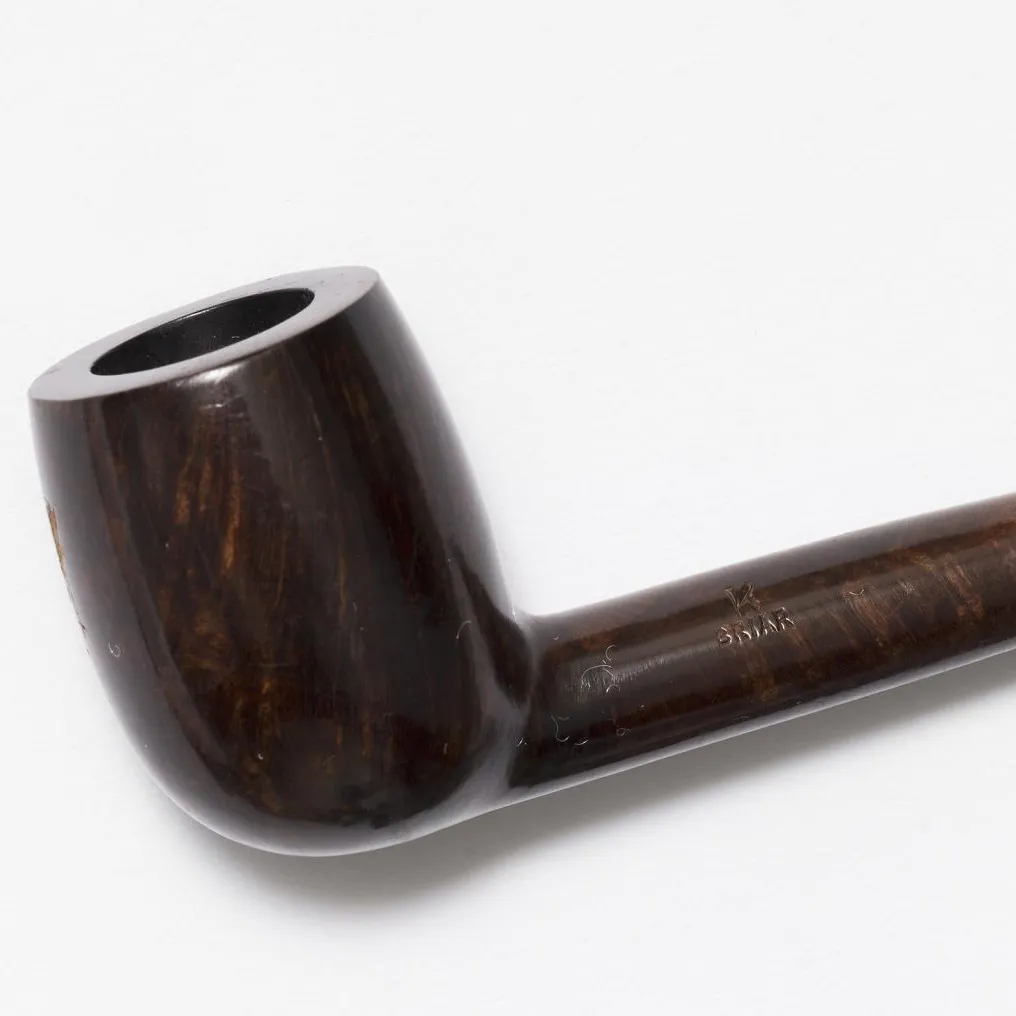
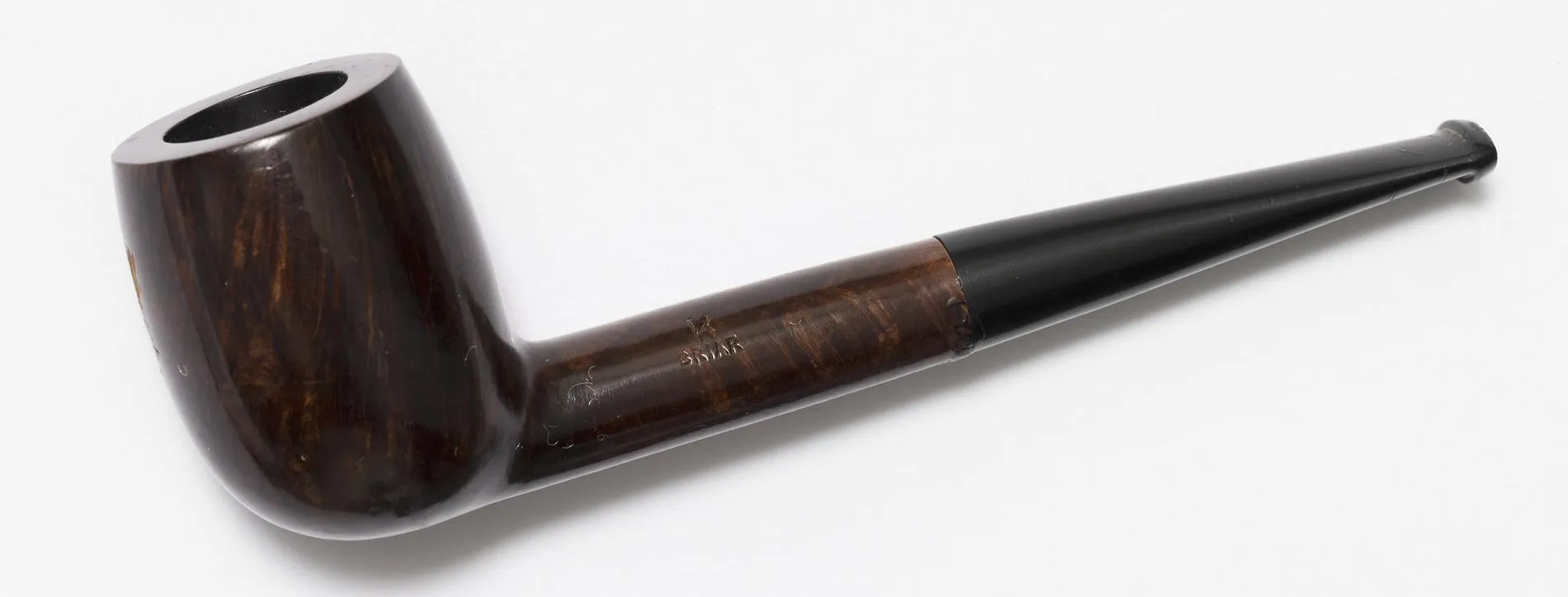
One of Ben Chifley's pipes
A gift from Ben Chifley to his driver.
This wooden pipe was given by Ben Chifley (prime minister of Australia from 1945 – 1949) to his driver, Ray Tracy, as a token of esteem and friendship.
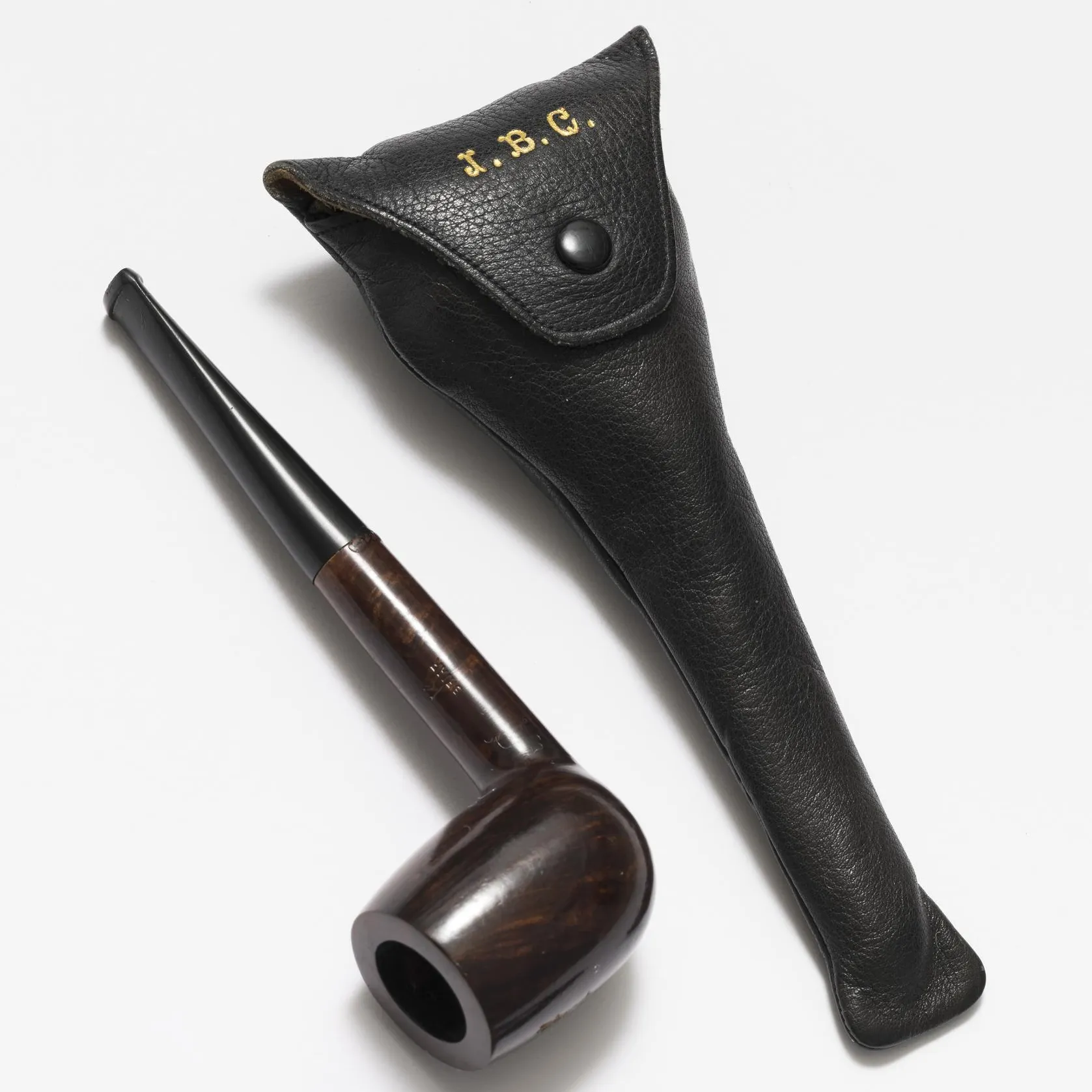
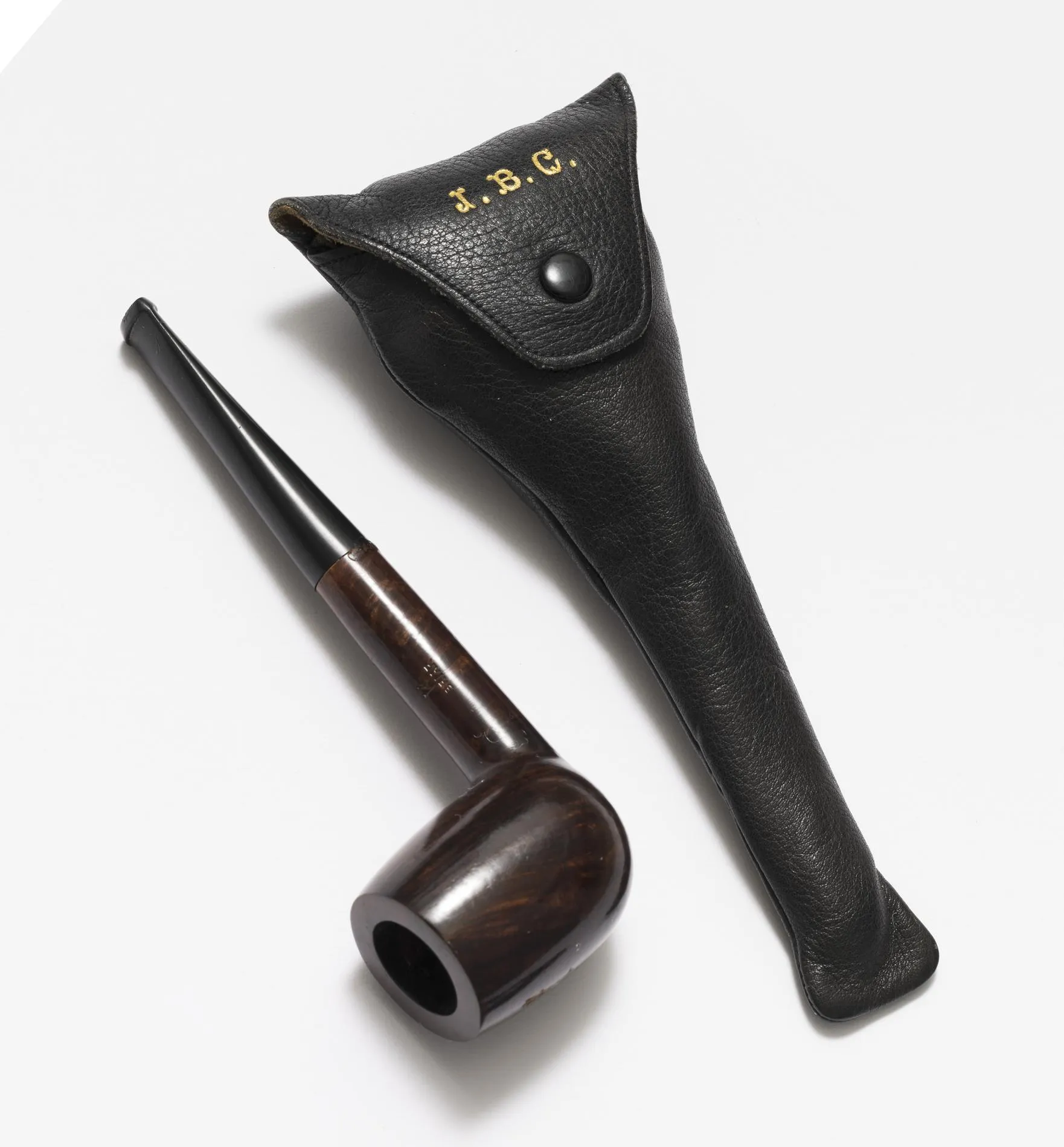
Ben Chifley was known to have many pipes, this particular pipe doesn't look well-used. The leather case is monogrammed 'J.B.C.', Chifley's initials. This isn't just a functional object – it was clearly meant to be special.
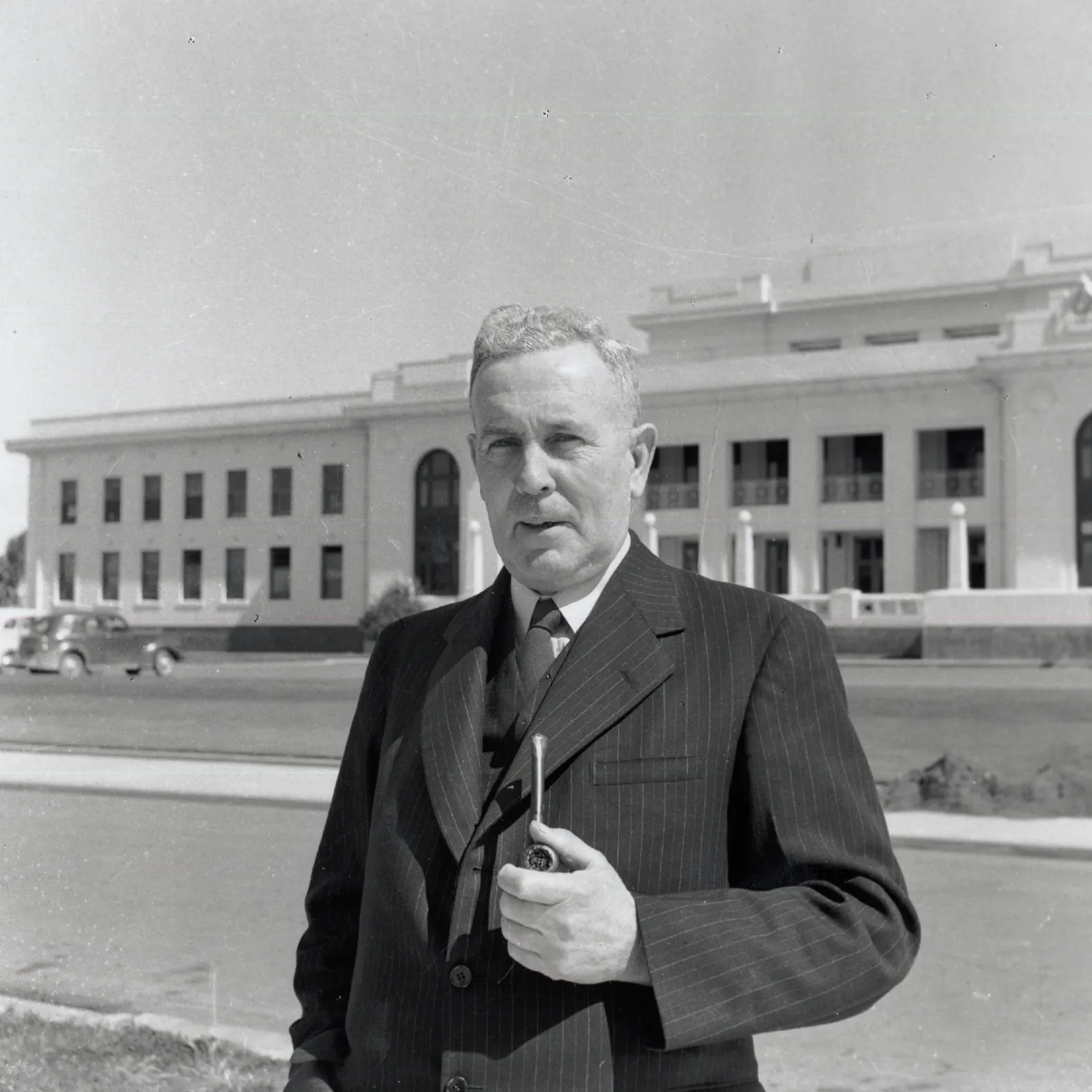
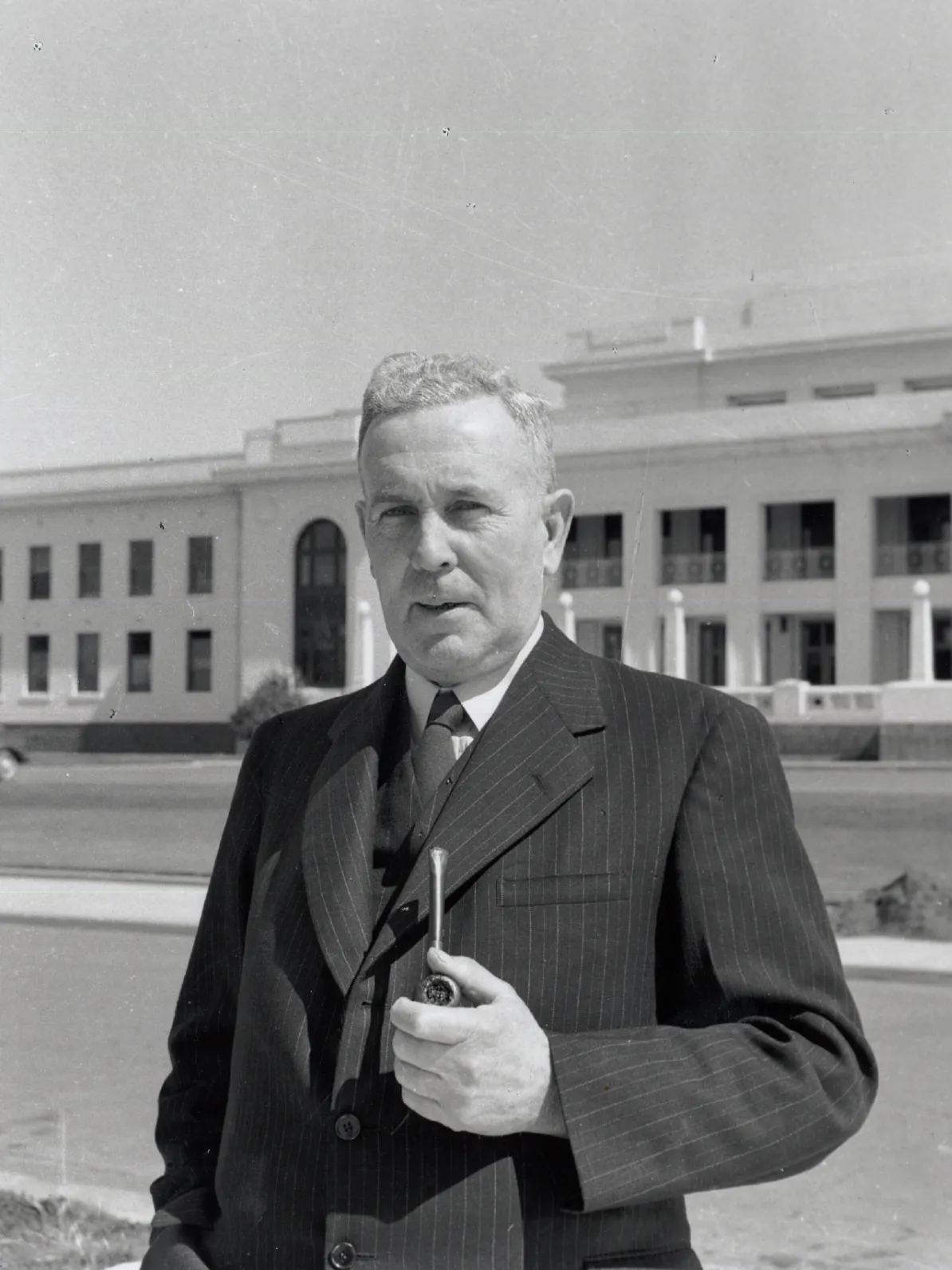
Ben Chifley was rarely seen without his trademark pipe. Here, Chifley stands outside Parliament House holding it in his hand, about 1945. Photograph courtesy National Museum of Australia
When it comes to symbols of Australian politicians, the gold standard would surely be Ben Chifley and his iconic pipe. Chifley knew the pipe was a key part of his image and played to it.
A pipe was said to be a more trustworthy way of smoking than a cigarette, and Chifley's image as a kindly, trustworthy and benevolent father figure was amplified by his use of a pipe as an accessory. It was also, according to at least one biographer, a handy prop – lighting or holding it gave Chifley thinking time, enhancing his contemplative persona. So closely associated was Chifley with the pipe, that supporters asked for used pipes as mementos. It was therefore fitting that Chifley would gift one of his pipes to Ray Tracy, his driver and assistant.
Raymond John 'Trace' Tracy was a driver for ten prime ministers, from Billy Hughes to Robert Menzies. He was particularly close to some of them, especially John Curtin, and many of them thought highly of him. One media report described Tracy as looking like a 'cross between an American film magnate and a paddock bookmaker' and having the 'discretion of a Jeeves.'
He had a reputation as a reliable employee and confidante, as well as for indulging some prime ministers, such as Billy Hughes, in their desire for speed, road rules be damned. For at least some of his time as a driver, Tracy lived at the Canberra residence of the prime minister, the Lodge, so he could be available when needed and was recorded as having played cards or billiards with some prime ministers of an evening. One account records that Tracy was the second-last person to speak to John Curtin before Curtin's death. Tracy is said to have (falsely) told the dying prime minister that his football team, Fitzroy, had won.
Tracy was honoured with a British Empire Medal in 1933 for his services, and his reputation only increased from there. In 1950, on his retirement, Tracy received a reference from Prime Minister Menzies himself, and it was reported that filling Tracy's exceptionally large shoes was a difficult task.
It's unknown when this pipe was given to Tracy, but it may have been a retirement gift – when Tracy decided to move on in 1950, Chifley was serving as Leader of the Opposition.
Who was Ben Chifley?
Joseph Benedict 'Ben' Chifley (1885-1951) was Australia's 16th prime minister, in office from 1945 to 1949. He began his career as a train driver, and was Minister for Defence from 1929 to 1931. From 1941 he was Treasurer in the government of John Curtin. Chifley was Curtin's lieutenant and most valued minister, and after Curtin's death Chifley was elected to succeed him. Chifley was prime minister at the end of World War II and was responsible for announcing to Australians that Japan had surrendered. His government focused on reconstruction and economic development, initiating the Snowy Mountains Scheme and the post-war immigration boom, as well as making reforms in social policy such as pensions and maternity payments.
Labor was defeated in 1949 and Chifley remained Leader of the Opposition until his death at the Kurrajong Hotel in Canberra in 1951. Chifley was a popular leader with a plain-spoken, down-to-earth personality that resonated with many Australians.
You may also be interested in...
Cabinet Room table
A table fit for a Cabinet.
Ethel Bruce's rail pass and tickets to the opening of Parliament House
First class travel for the wife of the prime minister.
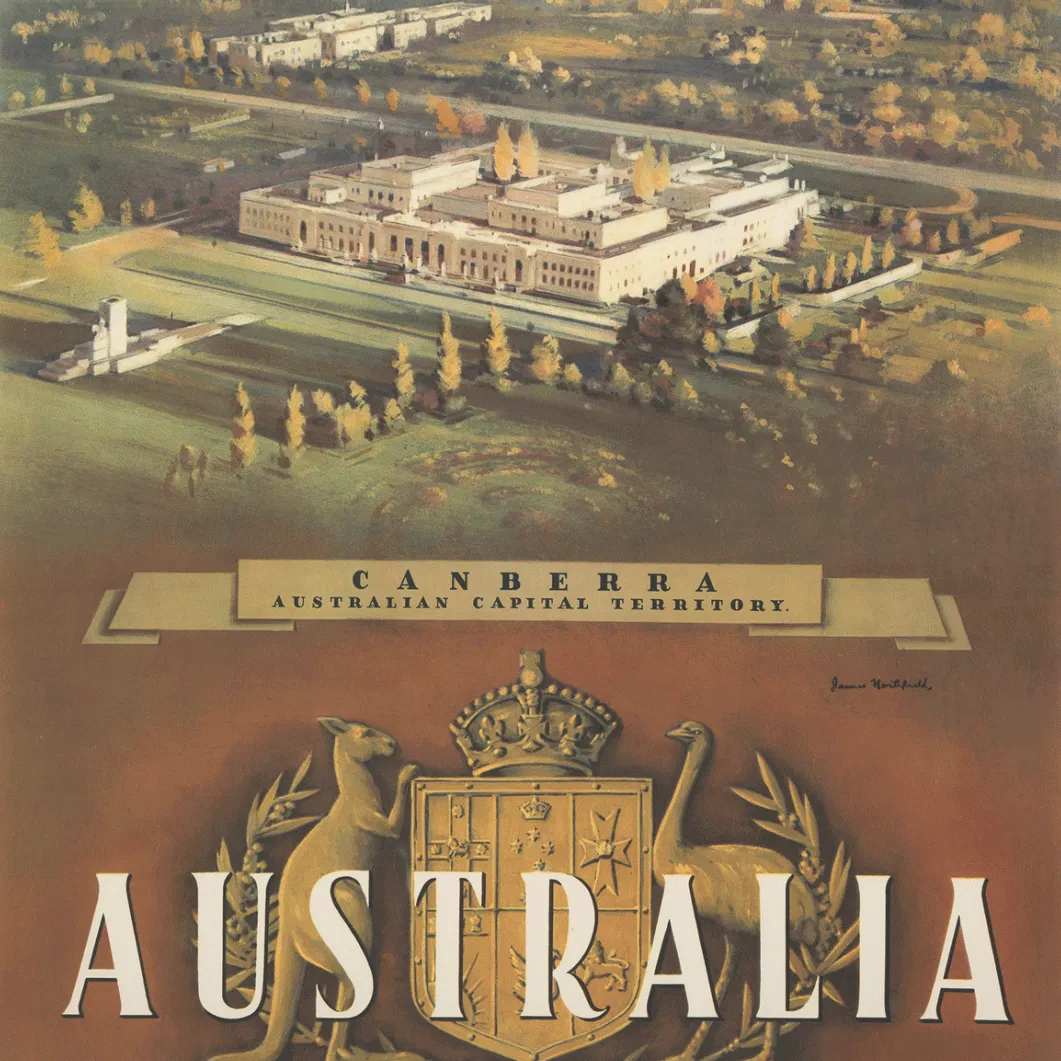
Canberra travel posters
Beautifully illustrated travel posters were a popular way of attracting potential tourists.
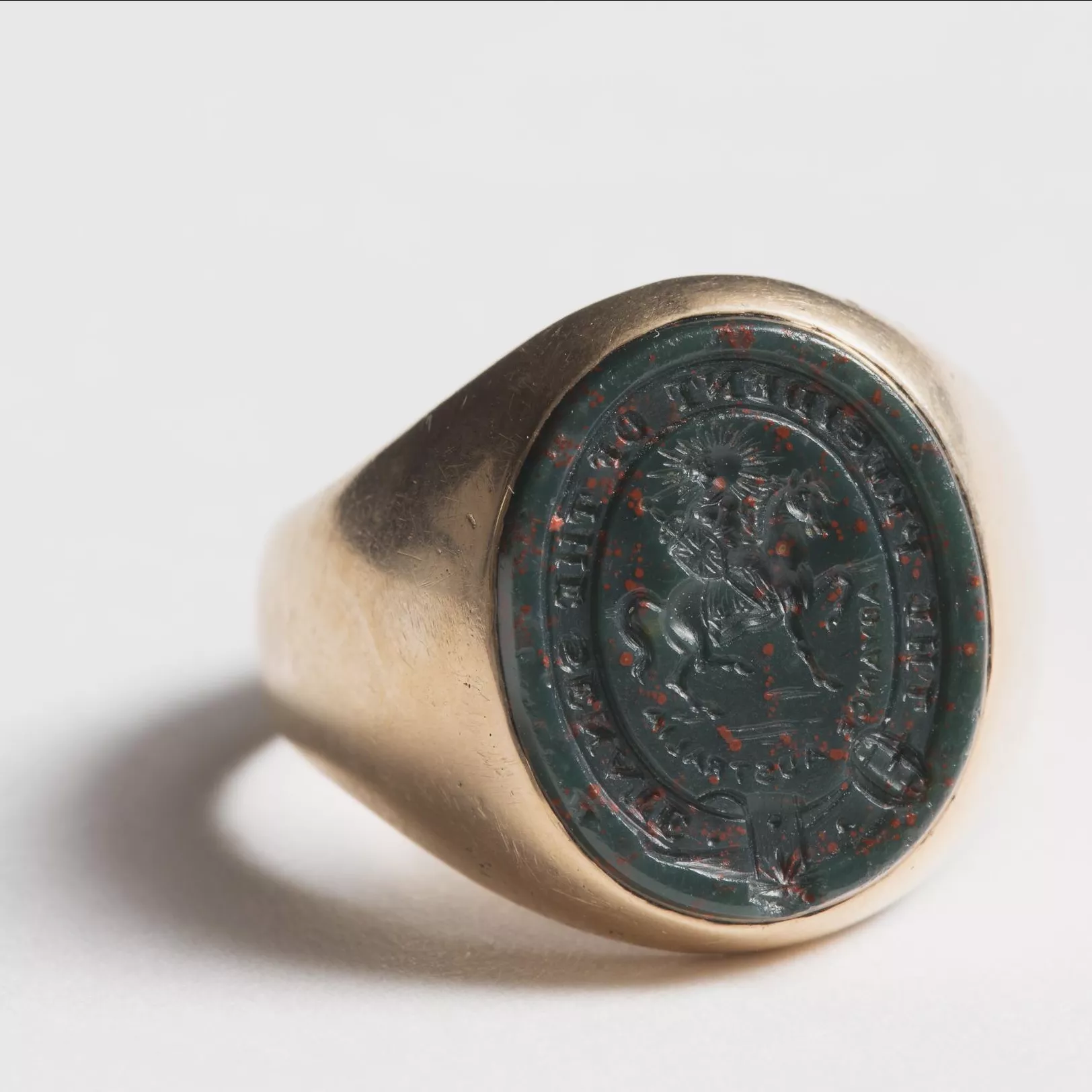
President of the Senate’s signet ring
Australia’s first ever President of the Senate likely commissioned this gold and bloodstone signet ring.
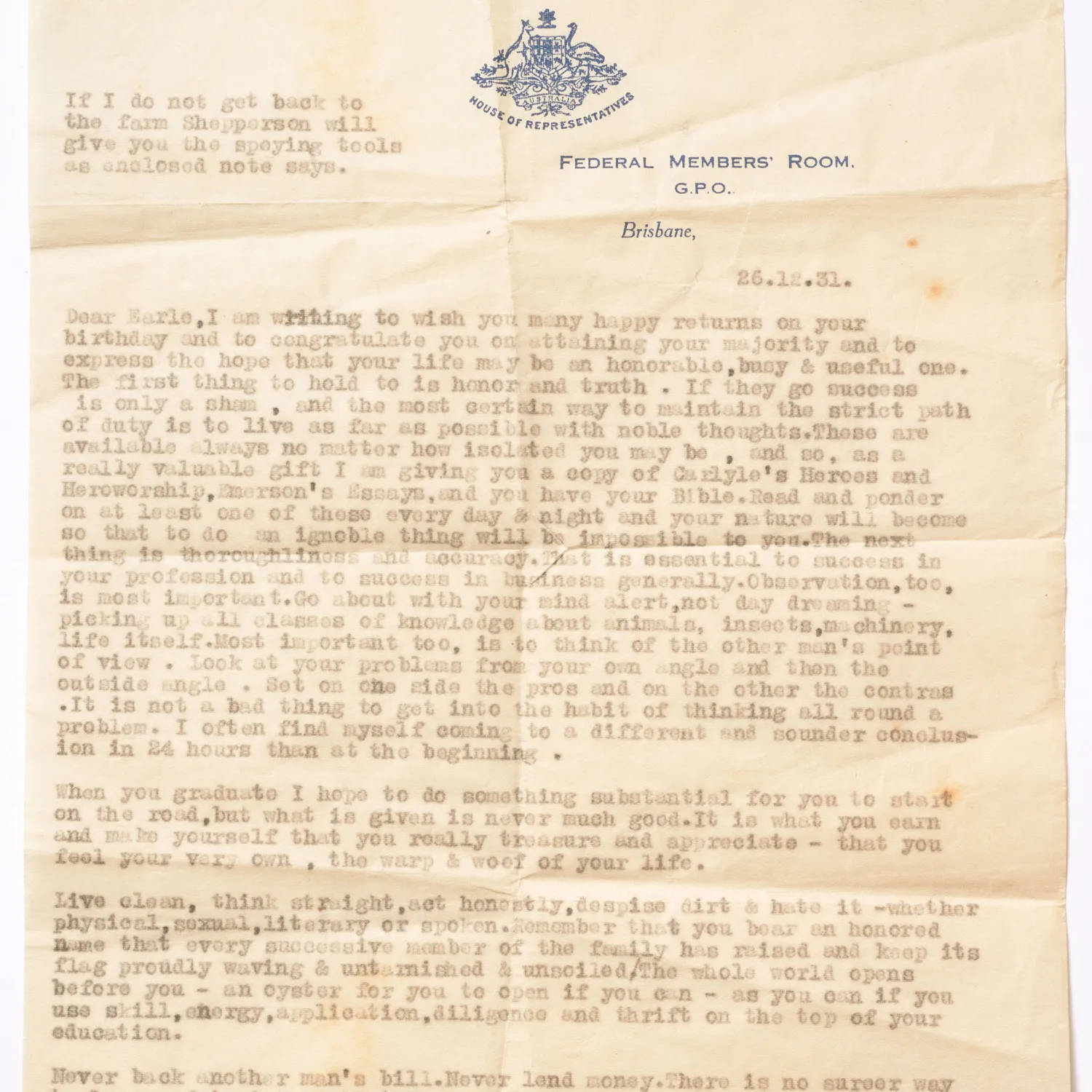
Letter from Earle Page to his son on his 21st birthday
Fatherly advice from a future prime minister.

‘Cathy’s Bling’ earrings
These small but mighty earrings were created for Cathy McGowan's campaign for the Indi electorate.
